
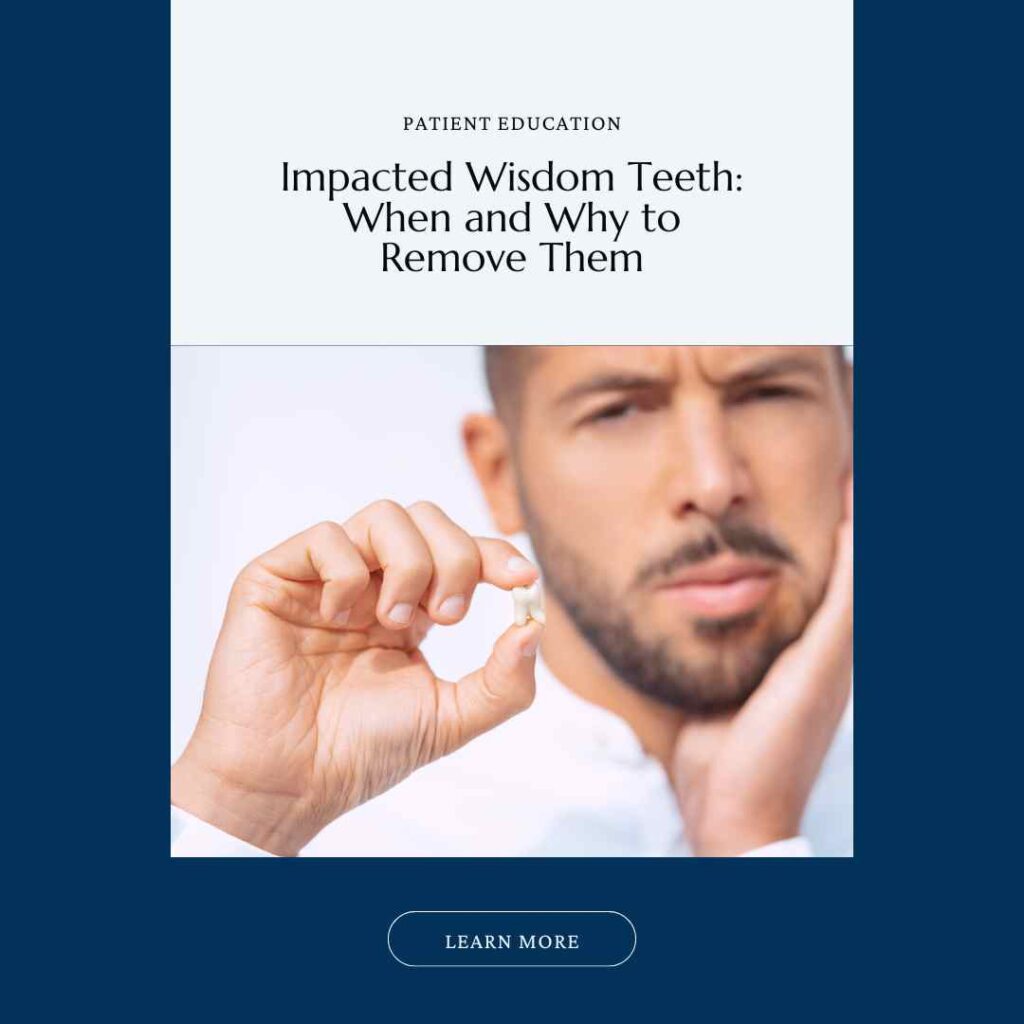
Dealing with impacted wisdom teeth can be a source of significant discomfort and anxiety for many. These silent culprits often stay unnoticed until they start causing problems, making it essential to understand not only the signs of impacted wisdom teeth but also the reasons behind their removal. Impacted wisdom teeth occur when there is not enough space in the mouth for the teeth to emerge properly, leading to potential infection, crowding, and tooth decay. Such complications underscore the importance of early detection and management to prevent more serious oral health issues.
This article aims to guide you through everything you need to know about impacted wisdom teeth, from identifying symptoms to understanding the removal procedure. We’ll explore why leaving impacted wisdom teeth untreated can lead to severe complications like infection, dry socket, and even damage to adjacent teeth. Knowing the typical signs of impacted wisdom teeth and the benefits of oral surgery can empower individuals to make informed decisions regarding their dental health. Furthermore, the article will provide insights into the tooth extraction process, offering reassurance and confidence to those who may face this common yet daunting dental procedure. Through a friendly and empathetic approach, we aim to demystify the process and highlight the importance of prioritizing your oral well-being.
Table of Contents,
What Are Impacted Wisdom Teeth?
Definition and Explanation
Impacted wisdom teeth are third molars at the very back of the mouth that do not have enough room to emerge or develop normally. Wisdom teeth are the last adult teeth to erupt in the mouth, typically appearing between the ages of 17 and 25. When there is insufficient space in the jaw or the teeth grow at an odd angle, they become impacted [1][2][3]. This condition can lead to various dental problems, including pain, damage to adjacent teeth, and further complications if left untreated.
How They Form
The formation of impacted wisdom teeth is primarily due to a lack of space in the jaw. As the last of the molars attempt to erupt, they can become trapped in the jawbone or gums. In many cases, these teeth are misaligned and can grow in various directions: they may position themselves horizontally, be angled towards or away from the second molars, or be tilted within the jaw [1][2][3].
There are different types of impactions based on the positioning of the wisdom teeth within the jaw:
- Soft-Tissue Impaction: Where the tooth has penetrated through the bone but not through the gum line [1].
- Partial Bony Impaction: Where the tooth has partially emerged from the bone, but a portion of the crown remains submerged [1].
- Full Bony Impaction: Where the tooth is completely encased by the jawbone [1].
These impactions can be further classified into:
- Mesial: The most common form, where the tooth angles toward the front of the mouth [2].
- Distal: Occurs when the tooth angles toward the back of the mouth and is the rarest form [2].
- Vertical: Where the tooth is correctly positioned for eruption but remains stuck beneath the gums [2].
- Horizontal: Where the tooth lies completely sideways, creating significant pressure against the adjacent teeth [2].
Understanding the specific type of impaction can help oral surgeons determine the appropriate treatment plan, which might include monitoring the teeth or performing an extraction to prevent potential complications.
*You might also like Cracked Teeth: Symptoms, Prevention, and Treatment
Symptoms of Impacted Wisdom Teeth
Individuals with impacted wisdom teeth may experience a variety of symptoms that can significantly impact their daily lives and oral health. Understanding these symptoms is crucial for timely intervention and treatment.
Pain and Swelling
One of the most common indicators of impacted wisdom teeth is pain and swelling around the affected area. The discomfort may extend from the jaw to the ears and neck, particularly when the teeth are misaligned and exert pressure on surrounding tissues and nerves. Swelling of the gum tissue around the wisdom teeth, known as pericoronitis, often occurs when a tooth is partially trapped under the gum. This condition can lead to acute symptoms such as severe pain, redness, and swelling of the gum tissue, and in some cases, pus or drainage, discomfort when swallowing, lockjaw, facial swelling, and swollen lymph nodes in the neck [4]. Chronic pericoronitis might manifest as mild, temporary achiness, bad breath, and a bad taste lingering near the back teeth [4].
Infection and Gum Disease
Impacted wisdom teeth are prone to infection and can contribute significantly to gum disease due to their hard-to-reach location, making them difficult to clean effectively. When an impacted wisdom tooth becomes infected, it can damage other teeth and lead to further dental problems. Symptoms of infection include tender, red, or swollen gums, and patients may notice an unpleasant taste in their mouth along with persistent bad breath [3]. The risk of periodontal disease increases with impacted or partially erupted wisdom teeth, which can progress with little or no immediate pain, posing a silent threat to oral health [5]. The neighboring teeth may also be at risk for bone loss and tooth decay [5].
As inflammation and infection persist, individuals might experience tenderness or swelling in the area, and an increased tendency to bite the cheeks or gums when speaking or chewing [5]. These symptoms underscore the importance of monitoring and potentially removing impacted wisdom teeth to restore a healthier state and reduce the risk of more severe complications.
Recognizing these symptoms early and consulting with a dental professional can lead to more effective management and treatment, preventing long-term damage to oral health.
Why Impacted Wisdom Teeth Should Be Removed
Potential Problems
Impacted wisdom teeth present a variety of complications that can affect overall dental health. One major issue is that these teeth can grow in at various angles, sometimes even horizontally, leading to crowding or damage to adjacent teeth [6]. When wisdom teeth are trapped within the gums, they are known as fully impacted and can lead to infections or cysts that damage other teeth roots or bone support [6]. Partially emerged wisdom teeth create a gateway for bacteria, increasing the risk of gum disease and infection. This scenario is further complicated as the back of the mouth is hard to see and clean, making these partially grown teeth susceptible to cavities that cannot be remedied with fillings [6].
Moreover, impacted wisdom teeth can push against the second molar, which may damage the molar or increase the risk of infection in that area [3]. The pressure exerted can also lead to crowding of other teeth or necessitate orthodontic treatment to straighten these teeth [3]. Additionally, cysts can form around these teeth within the jawbone, potentially leading to significant jaw damage and even the development of benign tumors [3].
Preventive Measures
Removing impacted wisdom teeth can often be seen as a preventive measure to avoid the onset of more severe complications. Dentists and oral surgeons may recommend extraction even if the impacted wisdom teeth are not currently causing symptoms, to prevent future dental problems [3]. This proactive approach is particularly advised for young adults, as the extraction procedure tends to be easier and recovery faster due to less dense jawbones and not fully formed tooth roots [6].
Furthermore, maintaining regular dental check-ups is crucial. These visits allow dentists to monitor the growth and emergence of wisdom teeth. Regularly updated dental X-rays can reveal impacted wisdom teeth before they start causing problems, thus allowing for earlier intervention [3]. This preventive strategy is essential not only to protect against potential physical complications but also to alleviate future discomfort and avoid more complex dental procedures.
The Removal Procedure
Consultation and Diagnosis
The journey to removing impacted wisdom teeth begins with a thorough consultation and diagnosis. During this initial visit, the oral surgeon evaluates the health of your wisdom teeth and conducts a detailed dental X-ray to pinpoint their exact positions [7]. Patients should be prepared to discuss their full medical history, including any medications, vitamins, or supplements they are currently taking, as these can affect the surgery and anesthesia [7]. The surgeon might also discuss various sedation options, ranging from local anesthesia to general anesthesia, depending on the patient’s comfort and the complexity of the case [7].
Steps in the Surgery
On the day of the surgery, the oral surgeon administers anesthesia to ensure comfort throughout the procedure. The process involves making precise incisions in the gums to expose the impacted teeth, which may be embedded in the gums or jawbone [7]. The surgeon then carefully loosens and extracts the wisdom teeth, often sectioning them for easier removal [8]. The area is meticulously cleaned to prevent infection, and stitches may be placed to aid the healing process [8]. To manage bleeding, gauze is applied over the surgical site [9].
Post-Surgery Care
After the extraction, managing discomfort and preventing complications is crucial. Patients are advised to keep the gauze pad in place for about 30 minutes and replace it if bleeding continues [9]. It’s important to avoid any activities that could dislodge the blood clot, such as vigorous rinsing, using straws, or smoking [10]. Swelling can be controlled with ice packs applied intermittently for the first 48 hours [10]. Pain management typically includes over-the-counter pain relievers and prescribed medications, if necessary [9]. Patients are encouraged to consume soft foods and maintain hydration while avoiding strenuous activities for a few days to facilitate recovery [10]. Regular follow-ups and gentle oral hygiene practices are essential to monitor healing and address any concerns such as dry socket or infection [10].
Conclusion
Throughout this article, we’ve navigated the complex terrain of impacted wisdom teeth, casting a light on the various scenarios under which these hidden dilemmas warrant attention and action. From identifying the telltale signs and symptoms that beg for a proactive approach to understanding the intricacies of the removal process, we’ve emphasized the ultimate goal: preserving your oral health and well-being. The narrative weaved not only outlines the potential complications arising from untreated impacted wisdom teeth but also arms you with knowledge about the preemptive measures and the necessity of timely intervention, ensuring that informed decisions form the cornerstone of your dental care strategy.
The significance of acting upon the first hint of discomfort or anomaly cannot be overstated, as it paves the way for preventing more serious complications that might compromise one’s overall oral health. Recognizing when to seek professional advice is pivotal, and if you’re worried about your wisdom teeth and whether they need to be extracted, give us a call at 620-678-9014 to schedule a consultation. As we journey through the paths of preventive care and corrective measures, the essence of maintaining rigorous dental check-ups emerges as both a shield and a beacon, guiding us towards achieving and retaining optimum oral health, undeterred by the trials posed by impacted wisdom teeth.
FAQs
1. Do I need to have an impacted wisdom tooth removed?
You might need to remove your wisdom teeth if you experience pain around the wisdom teeth area, have recurring infections of the soft tissue behind the last lower tooth, or develop cysts, which are fluid-filled sacs.
2. Why is it more difficult to remove impacted wisdom teeth?
Impacted wisdom teeth can be challenging to remove due to complete bony impaction where there is no space for the tooth to emerge. It remains embedded in the jawbone, and if it is partially visible, it might require advanced surgical techniques for extraction. Additionally, the unusual positioning of the tooth can complicate the removal process.
3. At what age should wisdom teeth be removed?
It is advisable to remove wisdom teeth early, typically in your late teens or early twenties, as they can lead to dental health issues. Wisdom teeth are considered an evolutionary relic that often causes complications in modern humans.
4. What causes a wisdom tooth to become impacted?
Wisdom teeth become impacted due to insufficient space for them to emerge or develop normally. They typically start to come in between the ages of 17 and 26. In some cases, wisdom teeth can emerge behind the second molars and align with the other teeth without causing any issues.
References
[1] – https://innovativeoralsurgery.com/bucks-county-wisdom-teeth-removal/impacted/
[2] – https://my.clevelandclinic.org/health/diseases/22296-impacted-wisdom-teeth
[3] – https://www.mayoclinic.org/diseases-conditions/wisdom-teeth/symptoms-causes/syc-20373808
[4] – https://my.clevelandclinic.org/health/diseases/24142-pericoronitis
[5] – https://www.orasurgery.com/wisdom-tooth-removal-reduce-the-risk-of-developing-gum-disease/
[6] – https://www.mayoclinic.org/diseases-conditions/wisdom-teeth/expert-answers/wisdom-teeth-removal/faq-20058558
[7] – https://my.clevelandclinic.org/health/treatments/22119-wisdom-teeth-removal
[8] – https://www.mayoclinic.org/tests-procedures/wisdom-tooth-extraction/about/pac-20395268
[9] – https://www.venturaoralsurgery.com/instructions-wisdom-teeth-removal
[10] – https://www.canyonofs.com/instructions-wisdom-teeth-removal/
MedicAL DISCLAIMER
If you choose to use the information available on the Website without prior consultation with and consent of your physician, you are agreeing to accept full responsibility for your decisions and agreeing to hold harmless Randall K. McVey, DMD PA, its agents, employees, contractors, and any affiliated companies from any liability with respect to injury or illness to you or your property arising out of or connected with your use of this information.